

HOW TO DEVELOP LEADERS IN A LAW FIRM: WHY GREAT LAWYERS DON’T AUTOMATICALLY BECOME GREAT LEADERS
I’ll say the uncomfortable part first: being an exceptional lawyer does not automatically make someone an exceptional leader.
Law firms invest heavily in recruiting legal talent. Far fewer invest with the same intention in teaching talented people how to lead.
That becomes expensive when the next promotion suddenly includes managing people, making decisions, developing teams, and protecting culture—skills nobody actually taught.
WHAT MAKES A GOOD LAW FIRM LEADER?
Legal expertise matters. Leadership requires an entirely different set of capabilities.
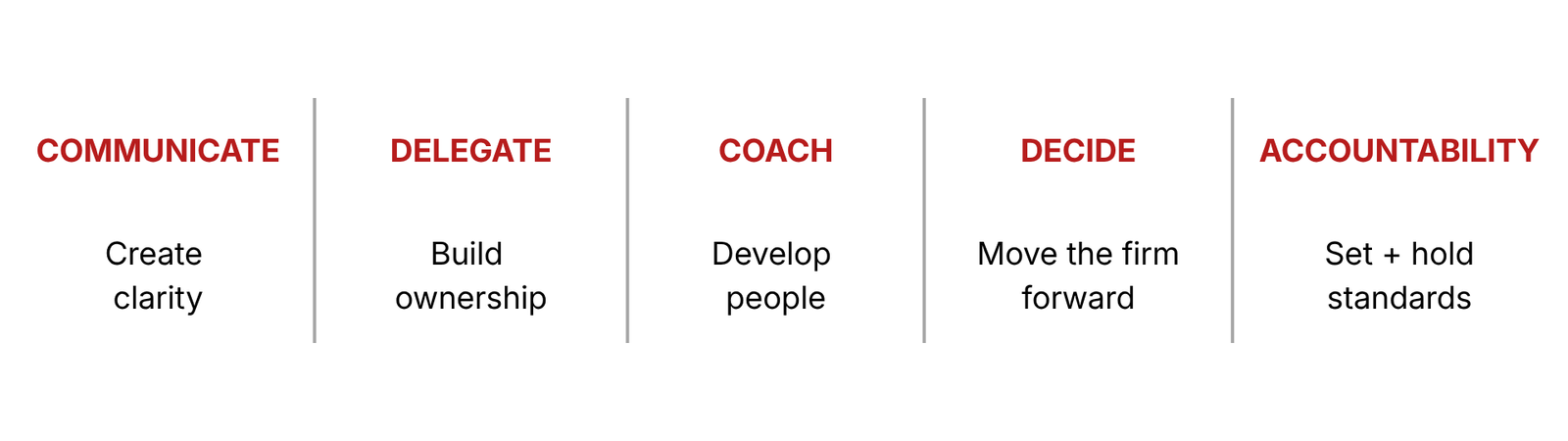
Technical excellence solves legal problems. Leadership builds organizations.
CAN LEADERSHIP SKILLS BE DEVELOPED?
Yes. Leadership is not a personality trait reserved for a few naturally gifted people. It is a capability that can—and should—be developed intentionally.
Future leaders need opportunities to make decisions, manage people, receive feedback, understand the business, handle conflict, and learn accountability before the firm depends on them.
HOW DO LAW FIRMS BUILD A LEADERSHIP PIPELINE?
Identify potential leaders early, then give development the same structure you give legal training.
Mentorship helps. So does professional development. But leadership development cannot be an annual workshop.
It needs to be a system.
WHY DOES LEADERSHIP DEVELOPMENT MATTER FOR RETENTION?
People are more likely to stay where they can see a future—and where someone is intentionally helping them build it.
Compensation matters. So do flexibility and opportunity. But the quality of leadership shapes how employees experience all of them.
The legal profession has spent decades perfecting how it develops lawyers.
The firms that win next will become equally intentional about developing leaders.
Because leaders don’t appear by accident. They are built.